sábado, 27 de mayo de 2017

The presidential election in 1932

The Republicans won the presidential election in 1928 when the economy was still booming. Their candidate was Herbert Hoover. One year later, the Wall Street Crash happened and brought severe consequences for the USA’s industry and people. In the next presidential election, in 1932 (the first one after the Wall Street Crash), Hoover lost to the Democrat candidate, Franklin D Roosevelt. Many people state that this was mainly because of the Republican policies and their reaction to the Crash, but, how far is that true?

Resultado de imagen para herbert hoover
Herbert Hoover
To begin with, the Republican policies are four: Laissez faire (not interceding with people´s economy), tariffs for importation (they protected US industry against foreign competition), low taxation (they thought people would buy goods or invest in industry with that money) and trusts (huge corporations that dominated industry). Republicans wouldn´t change their basic policies, mostly because they believed that the Depression was caused by economic problems in Europe, not by failures in the US economy. They thought that business could solve its problems alone and that help from the Government was no needed. Moreover, they claimed that business consisted on a cycle of boom and bust, so prosperity would come back alone. It was because of the policy of Laissez-faire that Hoover did almost nothing to help people who were hit hardest for the depression, as he thought that social security and relief were a responsibility and should be provided by local governments. He faced bitter criticism because of that.

Resultado de imagen para franklin d roosevelt
Franklin D Roosevelt
Nevertheless, there were other causes for Roosevelt’s success in the presidential election, which were Hoover’s flaws and Roosevelt’s characteristics as a politician. As regard Hoover’s flaws, he was known as a “do nothing” president, even though he tried to do something, but that was not enough. He tried to restart the economy by cutting taxes and to persuade business leaders not to cut wages. Moreover, he set up the Reconstruction Finance Company to prevent banks from going bankrupts. He also tried to protect the US industry by tariffs, but this made the Depression worse. In connection to Roosevelts characteristics as a politician, he believed in an active government to improve people´s lives. He wanted to spend public many to create jobs (he already did this as Governor of New York), and asked for advise to experts (factory owners, economists and union leaders). He didn’t have a specific plan, but he realized that people wanted action and he gave them that.

To conclude, even though the Republican’s reaction against the Crash had to do with Roosevelt winning the election in 1932, Hoover’s flaws and Roosevelt’s characteristics were also very important. This was so because Hoover’s flaws exposed him to great criticism and turned public opinion against him, while Roosevelt gave people what they wanted.

viernes, 26 de mayo de 2017

Viaje a la SuperTierra

En clase de la materia Literatura, y a partir de los textos leídos previamente sobre la presentación de personajes y focalización, la profesora Florencia Casanova nos propuso escribir un cuento corto, en parejas, tomando con el tema principal un “viaje al espacio”, usando las reglas de Lodge para presentar al personaje y usando los distintos niveles y modalidades de focalización.


En lo personal, pienso que fue una buena experiencia, porque es más fácil trabajar con un compañero. Lo único que no me gustó tanto fue que el tema del cuento se limitara a un viaje al espacio, pero no fue un problema porque igualmente era un tema interesante. Para escribirlo, tuvimos una clase para pensar en el final de la historia y como queríamos que nuestro personaje fuese, y luego pensamos el resto de la historia partiendo desde ahí.

En cuanto a la focalización, decidimos que esta sea interna, fija y en tercera persona, ya que, por más que esté en tercera persona, está narrada desde la visión de Jorge, el personaje principal. Habíamos empezado a escribir en primera persona, pero luego vimos que nos salía mejor en tercera y decidimos cambiar eso. En cuanto a lo temporal, la focalización es pancrónica, porque el narrador conoce todo lo sucedido en todo el espectro temporal de la historia, es panorámica porque se conocen los sucesos en la Supertierra y en la Tierra (cuando Jorge llama y festejan). Las emociones son objetivas, porque se sabe lo que siente Jorge cuando está solo y, en cuanto al conocimiento, se conoce lo mismo que él.        

Utilizamos los métodos de Lodge para describir a Jorge, ya que no solo narramos su biografía y lo describimos físicamente, sino que también hablamos de su ropa, que muestra su estilo de vida, y mostramos su forma de pensar (cuando no le molesta sacrificarse por hacer un bien a la humanidad).

domingo, 21 de mayo de 2017

Reasons for the economic growth

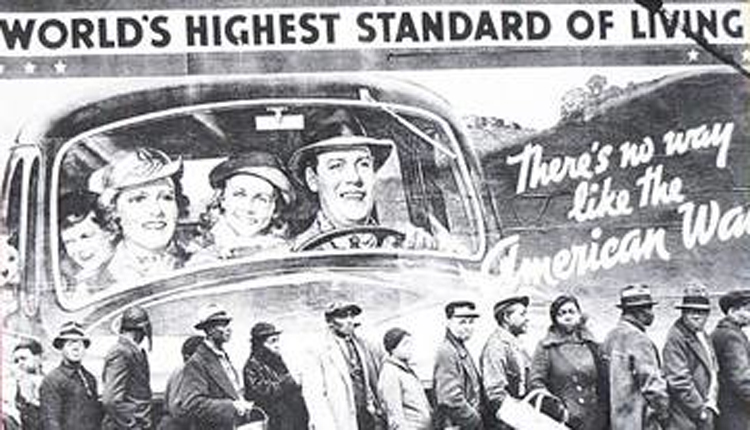
There was a great economic growth in the USA in the 1920s, which led to the “Boom” and the “Roaring Twenties”. Between its many reasons, there were hire purchase, that consisted on buying the good at the moment but paying it later on instalments, set by the seller; and credits, that were loans given by banks to consumers, so they could buy products. How important were hire purchase and credits among others causes for the economic growth?

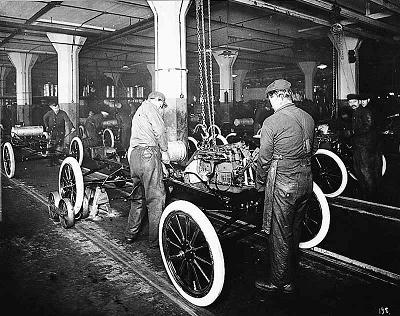
Resultado de imagen para economic boom in the usa 1920There is many people who firmly believes that they were the two main causes for the boom. To begin with, the Boom was a consumer-led boom, so the industries needed people to buy their products. Credits and hire purchase had an important part on making this happen, as they made possible for people such as factory workers and farmers to be able to afford to buy goods, such as cars, refrigerators, vacuum cleaners, radios, etc., as banks would lend people or small companies if they needed so, and most shops and companies used the hire purchase scheme. Moreover, hire purchase was used by many firms, such as the motor car industry, revolutionized by Henry Ford, due to the fact that the number of sales increased because of it and it was an easy way of making people buy what they produced. Credits allowed many speculators to invest on companies, what caused a rise in their shares’ prices, as there was more demand than offer. It was possible for them to buy shares because they bought them on the margin, what meant that they only paid for 10% of the total value. Most of speculators got the money to pay for shares by borrowing it (mainly from bank credits), and payed back when they had already sold the share and recovered money. Most people saw the share stock market as a quick way of getting rich, and many new millionaires flourished from that market indeed.

Resultado de imagen para economic boom in the usa 1920
On the other hand, some people believe hire purchase and credit were not major reasons for the economic growth. Even though they were very important reasons, there were other causes. One of the main causes was the USA’s industrial strength. The country’s industry was successful because they had the raw materials they needed within its borders and did no needed to import anything, added to the fact that electricity made everything easier, allowing factories to produce goods (the new household consumer goods as vacuum cleaners and radios) faster and in higher quantities. Besides, they were able to produce everything they needed for their population`s consumption, and exported their surpluses to other countries. Moreover, other main cause for the economic growth was the development of new methods of production, as Fordism, the use of new technologies and the Republican Policies (Laissez-faire, tariffs for importation, low taxation and the development of trusts). Another thing that boosted goods sales were the mass-marketing and advertising strategies used: the advertisers who campaigned to encourage people to join the army in the WWI now worked with companies to sell their products. Furthermore, some people believe the First World War had great influence in the economic boom, since it allowed the USA to sell arms and food to the allies and this one-way trade gave the American industry a great income. Moreover, after the First World War the USA became a world leader in several sectors of industry, such as the chemical industry which had been led by Germany before the world ruined the country. 


The way I see things, despite the fact that credits and hire purchase were indeed two major causes for the economic growth in the USA in the 1920s, this would not have been possible without the other reasons, such as advertising, the country’s industrial strength and the influence of the First World War.


domingo, 14 de mayo de 2017

Gases Contaminantes


Darwin y la Evolución

Charles Darwin nació en Shrewsbury, Shropshire, Reino Unido el 12 de febrero de 1809 y falleció el 19 de abril de 1882 en Kent, Inglaterra por una insuficiencia cardíaca (mal de Chagas).

Venía de una familia acomodada de la Inglaterra Victoriana, era hijo de un médico prestigioso, Robert Darwin, cuyo padre era el también médico y naturalista Erasmus Darwin. Su madre era Susannah Wedgwood, hija del famoso fabricante de porcelanas Josiah Wedgwood. Su padre lo impulsó a estudiar teología en Cambridge y medicina en la universidad de Edimburgo, pero abandonó sus estudios. Tenía 5 hermanos y tuvo cerca de 10 hijos.

Por más que estudiaba medicina y Teología, su interés principal, influenciado entre otros motivos por la lectura de las obras del alemán Alexander von Humboldt, eran las ciencias naturales. Este interés le impulsó a incorporarse a una expedición alrededor del mundo como naturalista, ahí fue donde comenzó a realizar sus observaciones.
Realizó sus principales observaciones en el H.M.S. Beagle (1831-1836), al mando del capitán Robert Fitzroy. También viajaban prisioneros patagónicos de una anterior expedición del Beagle, entre otros.
Visitó América del Sur, las islas del Pacífico, Australia, Nueva Zelanda y el sur de África.

·         Islas del Cabo Verde (Santiago): dedujo que la sucesión de eventos volcánicos había transformado la superficie de la isla.
·         Brasil: Observo fósiles de 32 especies extinguidas de cuadrúpedos terrestres. En Rio de Janeiro exploro la selva.
·         Uruguay: Desenterró grandes colmillos, un cráneo y garras de Toxodondo parecido a un hipopótamo. Eran restos de animales desconocidos.
·         Valparaíso, Los Andes y la Isla Chiloé: Observo grandes volcanes y encontró fósiles gigantes de mamífero en la isla. Concluyo que las montañas eran la barrera natural que determina el surgimiento de especies diferentes.
·         Galápagos: Observo especies animales y vegetales únicas, grandes tortugas y pinzones. Especies desconocidas de peces insectos y plantas. Darwin atribuye su teoría de la evolución a las observaciones en esta isla.
·         Australia: Especies animales diferentes: Canguros, Coalas y Marsupiales.

Presentó las conclusiones obtenidas en el viaje en su libro “El origen de las especies” en 1859, que se agotó en una semana. Como Darwin preveía, no le cayó bien a la sociedad británica del siglo XIX, muy conservadora, que lo consideraba como una herejía. Por ello recibió críticas y ataques a su persona durante el resto de su vida. El trabajo no fue muy aceptado por la sociedad científica en su momento, por lo que también Darwin recibió muchas críticas por parte de colegas y fue víctima de burlas. Hacia 1877 la teoría de la Evolución por medio de la selección natural había sido aceptada por la mayoría de la comunidad científica, que empezó a reconocérselo públicamente y a concederle los honores durante tanto tiempo negados, obteniendo distinciones, medallas, títulos, y lo integraron a las sociedades más importantes de la época, hasta que apenas quedó alguna recompensa científica que no hubiese conseguido.

Las principales ideas o postulados de su teoría, junto con Wallace, son que la variedad de diseños de seres vivos obedece a un proceso de tener descendencia con modificaciones y en el cuál cada generación cambia, aunque sea un poco en relación a la anterior. A lo largo del tiempo, estos cambios se acumulan y llevan a grandes transformaciones. Llegaron a concluir como se realiza el proceso de evolución basándose en cuatro postulados acerca de las poblaciones.


·         Postulado 1: los miembros individuales de una población difieren entre sí en muchos aspectos.
·         Postulado 2: por lo menos algunas de las diferencias entre los miembros de una población se deben a características que se transmitieron de los progenitores a la descendencia.
·         Postulado 3: en cada generación de una población, algunos individuos sobreviven y se reproducen con éxito, pero otros no.
·         Postulado 4: el destino de los individuos no está determinado por el azar o la suerte. En vez de ello, la probabilidad de supervivencia y reproducción de un individuo depende de sus características. Los individuos con características que les confieren ventajas sobreviven más tiempo y dejan el mayor número de descendientes, un proceso que se conoce como “selección natural”.


Libro

lunes, 24 de abril de 2017

Sports and health

Not many people are really aware of what they eat and the exercise they do. That is a big mistake, as an unhealthy diet and lack of exercise may result in health problems (as obesity, which is a world problem). That can be prevented by only being conscious of your situation. Moreover, aesthetically, being fit depends largely on what you eat and the amount of exercise you do.

An alternative as a possible solution for this problem might be the promotion of sports and a healthy lifestyle through advertising in the media, mainly television and social networks, which have most users/consumers. This option may have a good outcome, as it will be widespread due to the great number of consumers media has. A drawback of this option can be the high cost of TV advertisement.

Imagen relacionada

Otherwise, the ultimate solution may be in education: children can be taught the importance of a healthy lifestyle. If it is done successfully, those children will implement this knowledge all their lives. This strategy has its weak point, and that is that it takes a long time to put in practice, added to the fact that not all children have access to education.


To conclude, both solutions are necessary, as kids need to be well-educated about this theme and sports and a healthy lifestyle need to be widespread to people that were not educated. In my opinion, the option of education will be the better in the long term, as if kids are aware of this since a young age, they will take care for ever.

lunes, 17 de abril de 2017

Cars in big cities

Cars can be very nocive for human life and, especially, for the environment, as they generate pollution (air, noise and visual) because of the fumes they produce and the noises they make. Moreover, traffic jams pollute visually and can cause inconveniences to people who may have to arrive somewhere. The effect cars make is worse in big cities, where you have to add the huge buildings, factories and overcrowding. Therefore, it is important to reduce the number of cars.

Resultado de imagen para cars in big cities

There can be possible solutions and measures governments could take to reduce the amount of cars in cities using taxes as a method. One of them may be making businesses pay for their employees’ parking, so they will look for a new place to relocate. Otherwise, they could try making enterprises or businesses pay a tax for each employee who goes to work with its own car, which may make the business adopt a policy of asking their employees to come to work by other means.

In exchange, governments could try to take measures by using education as a method. One possible solution is teaching people how better pedestrianized city centres work, so as people would prefer going to work on foot. Moreover, governments may make people conscious of the impacts cars have towards the environment, which may change people’s minds about using cars.


In conclusion, I think that the solutions using taxes as a method could be more efficient and easier to put in practice, as the government would only depend on itself for implementing them (in the ones with education they would also depend on the people learning).